
.svg)
.svg)


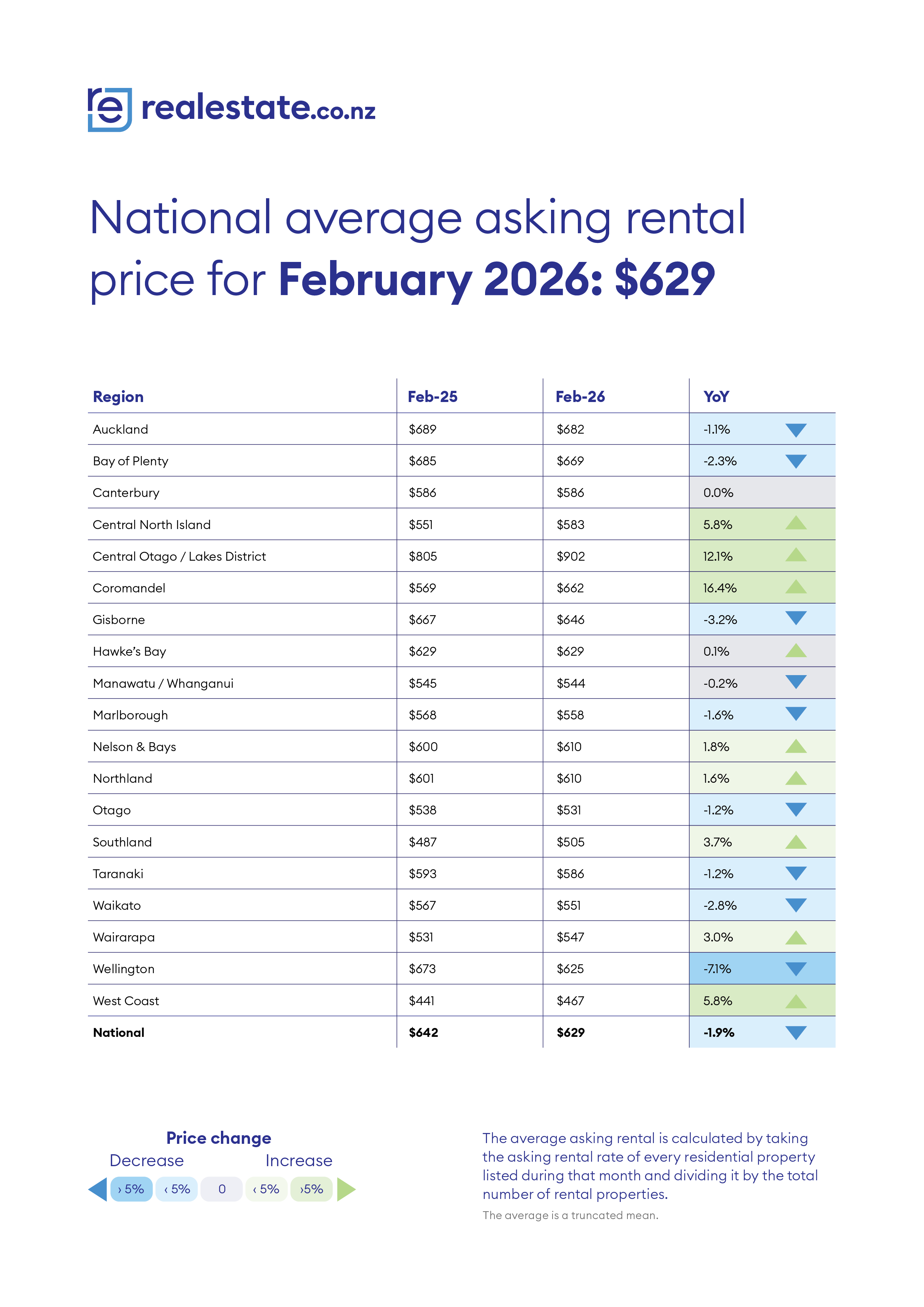
- Central Otago / Lakes District becomes first region in New Zealand to surpass $900/week average rent
- In contrast, the national average rent eased to $629 per week, down 1.9% year-on-year
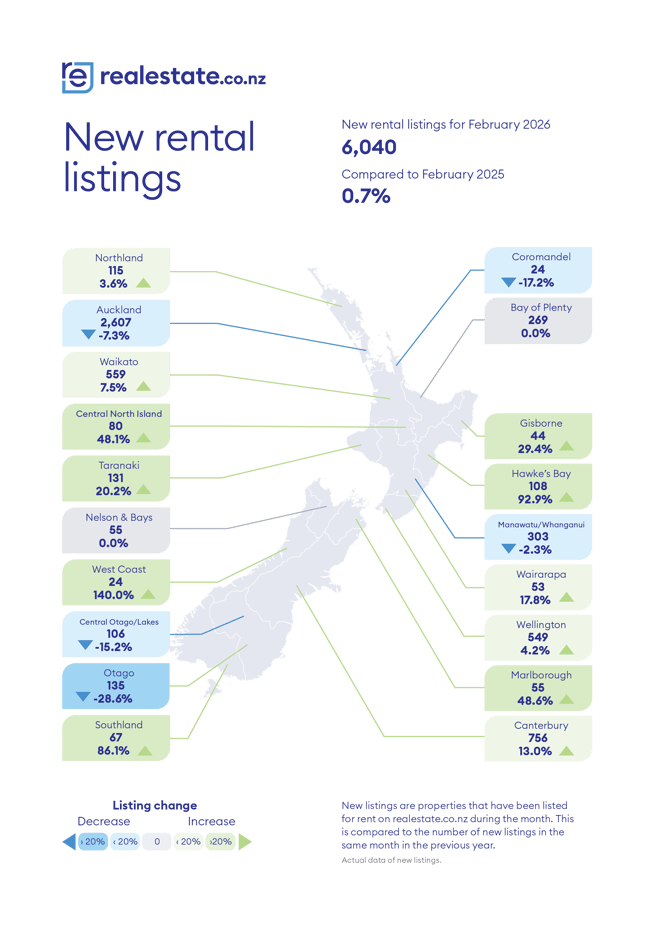
- Eight of 19 regions experience double digit growth in new rental listings – West Coast leads with 140% increase
Central Otago/Lakes District is in a league of its own.
Latest data from realestate.co.nz shows the region’s average weekly rent is now $902/week, driven by Queenstown’s average weekly rent of $993 and Wanaka’s average weekly rent of $924. Central Otago has recorded an average weekly rent of $690 in February 2026., a 10.8% increase on last year.
This makes the region the first in New Zealand to break the $900 mark.*
The record high for the region means renters are now paying an average of around $100 more per week then they were in February of 2025 when the average rent was $805/week.
Nelson & Bays also reported a record high average rental price of $610/week, a more steady increase of1.8% year-on-year from $600 in February 2025.
Meanwhile, the national average rent has eased to $629 per week, down 1.9% year-on-year. Wellington experienced the greatest year-on-year decline with rents in the capital falling 7.1% from $673/week in February 2025 to $625/week in February 2026.
Vanessa Williams, spokesperson for realestate.co.nz, says the $900 figure is a defining moment for the market.
“Crossing the $900/week threshold is significant and signals that Central Otago / Lakes District has firmly cemented itself as New Zealand’s premium long-term rental market, not just a holiday hotspot.
What we’re seeing is sustained demand in a region where supply remains tight. Even as national rents ease slightly, this part of the country continues to operate in a league of its own.”
*Note: Coromandel averages are heavily influenced by short-term luxury holiday homes, resulting in periodic rental spikes that distort long-term market comparisons. Central Otago Lakes District, as a predominantly long-term rental market, has experienced a more consistent upward trend in average weekly rents over the past two years.
Average weekly rent per bedroom in Central Otago/Lakes District, February 2026
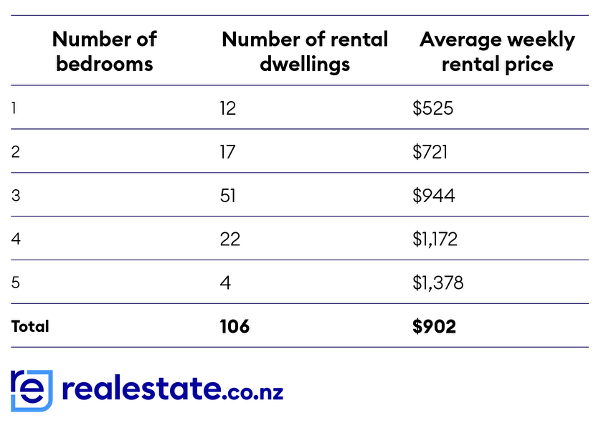
Three-bedroom homes, typically the backbone of the family rental market, are now sitting just shy of $1,000/week across the region, while a one-bedroom home, typically seen as a more affordable option, now sits at more than $500/week.
The rising cost of rentals in the region is putting a strain on the population, many of which are hospitality workers. It’s a situation, KiwiSaver provider, Simplicity, has responded too.
The KiwiSaver plan has committed to building 600 long-term rental houses in Queenstown in a bid to combat the town’s rising rent costs. Sam Stubbs, Managing Director of Simplicity (NZ) Ltd, says the region needs affordable long-term rentals for those who work in the town.
“It is crazy that hard working people have to pay so much for a roof over their heads. We are determined to build affordable, quality homes for long-term rent in the region. It’s a good investment for our members and is another housing option for many."
Where did new rental listings increase in February?
New listings increased just 0.7% nationally year-on-year, with 6,040 rental properties coming onto the market in February.
The West Coast experienced the greatest surge in rental listings with a 140% year-on-year increase to 24 properties.
Hawke’s Bay also recorded a significant year-on-year increase in listings, up 92.9% as did Southland, up 86.1% year-on-year. Otago recorded the greatest year-on-year decline (28.6%) in rental listings, with 135 rental properties available compared to 189 in February 2025.
Williams says although national listing levels have remained relatively flat year-on-year, the regional variation tells a more meaningful story about local market dynamics.
“It is crazy that hard working people have to pay so much for a roof over their heads. We are determined to build affordable, quality homes for long-term rent in the region. It’s a good investment for our members and is another housing option for many."
Stock levels rise in February, but where?
Rental stock has increased 6.2% year-on-year in February 2026 to 7,504 up from 7,064 last year. The regions with the greatest increase in rental stock were:
- Hawke’s Bay, (114.5%)
- West Coast (up 93.8%)
- Central North Island (up 75.4%)
- Marlborough (up 77.4%)
- Gisborne (up 60%), and
- Wairarapa (up 50%)
Otago and Central Otago / Lakes District experienced the largest year-on-year declines, with stock levels falling 30.3% and 23.9% respectively.
Williams says Central Otago / Lakes District falling stock levels coupled with its record $900/week average rental price is a prime example of supply and demand forces at play.
“The region is facing sustained pressure from tenants wanting to live and work in the region, but with fewer properties available, it’s clear that competition is intensifying and rents are responding accordingly.”
For media enquiries, please contact:
Hannah Franklin | hannah@realestate.co.nz
Want more property insights?
- Market Insights: Search by suburb to see median sale prices, popular property types and trends over time.
- Sold properties: Switch your search to sold to see the latest sale prices and an estimated value in the current market.
Find a glossary of terms here.
Share
-
.svg)
.svg)
.svg)